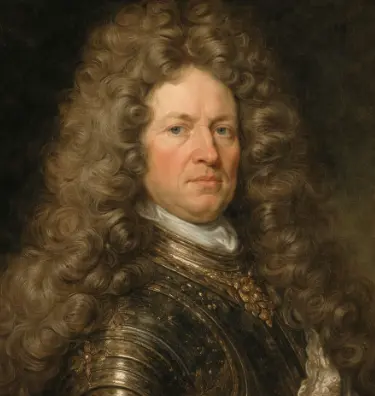
Most people have never heard the name Johann Paul Trump. Yet without him, two of America’s most powerful family names, Trump and Heinz, would not exist as we know them.
He was not a king. He never crossed an ocean. He died in the same small German village where he was born. But his nine children carried forward a bloodline that would later produce a US President and the founder of the world’s most famous ketchup empire.
This is his real story, drawn from German parish records, baptismal documents, and verified genealogical archives, not the recycled summaries floating around online.
Johann Paul Trump Bio/Wiki:
| Detail | Information |
|---|---|
| Full Name | Johann Paul Trump (baptized as Johann Paul Tromp) |
| Born | August 1, 1727, in Bobenheim am Berg, Electoral Palatinate (modern-day Germany) |
| Baptized | August 6, 1727, at Weisenheim am Berg parish church |
| Died | February 10, 1792 (age 64), in Bobenheim am Berg |
| Buried | February 12, 1792 |
| Father | Johannes Sebastian Trump (1699–1756), church warden and parish council member |
| Mother | Susanna Margretha Kohl |
| Spouse | Maria Elisabetha Setzer (married February 7, 1768) |
| Children | Nine, all born in Bobenheim am Berg |
| Occupation | Bürgerlicher Einwohner (citizen-resident) |
| Surname Spelling | Tromp until 1780; Trump from 1783 onward |
| Relation to Donald Trump | Third great-grandfather |
| Relation to H.J. Heinz | Great-grandfather |
| Region | Electoral Palatinate (Kurpfalz), now Rhineland-Palatinate, Germany |
Who Was Johann Paul Trump?
Johann Paul Trump was a German villager born in 1727 in the wine-growing region of the Electoral Palatinate. He spent his entire life in or near Bobenheim am Berg, a tiny farming community in what is now western Germany.
He held the legal status of bürgerlicher Einwohner. The term translates roughly to “burgher resident” or registered citizen. It meant he had recognized rights in his village. He could own property, marry within the parish, and pass his status to his children. In 18th-century Germany, this was meaningful. Many people lacked even this basic recognition.
His exact profession remains unknown. Parish records simply describe him by his civic status, not his trade. His father, however, served as a church warden and sat on the Bobenheim parish council. That detail matters. It tells us the Trumps were not at the bottom of village society. They held quiet, local influence.
Johann Paul Trump’s Age, Height, and Weight
Johann Paul Trump was born on August 1, 1727, and died on February 10, 1792, which made him 64 years old at his death, a respectable age for rural 18th-century Germany. He also married unusually late, at 40. Any site claiming he died in 1811 at age 84 is incorrect.
His height and weight, however, are unknown. Parish records of the era tracked baptisms, marriages, and burials, not physical descriptions, and no portrait of him survives. So any specific height or weight listed online has simply been made up.
Johann Paul Trump’s Nationality, Ethnicity, and Religion
Nationality: German, with a caveat. A unified Germany did not exist in his lifetime; he was a subject of the Electoral Palatinate, a state within the Holy Roman Empire, in a region that is now Rhineland-Palatinate.
Ethnicity: Ethnic German, specifically Palatine German (Pfälzer), the people of the Palatinate wine country, who spoke their own regional dialect.
Religion: Evangelical Lutheran (Protestant). This is well documented, since every surviving record of his life comes from the local Lutheran parish registers.
The Earliest Trump Ancestor
Many articles claim Johann Paul Trump is the earliest known Trump ancestor. That is incorrect.
The earliest documented male ancestor in the Trump line is Johann Philipp Drumpft (sometimes spelled Drumpf or Trump), born around 1667 and died in March 1707 in Ellerstadt. He married Juliana Maria Rodenroth. Their son, Johannes Sebastian Trump (1699–1756), became Johann Paul’s father.
So the line runs:
- Johann Philipp Drumpft (c.1667–1707): the earliest known
- Johannes Sebastian Trump (1699–1756): father
- Johann Paul Trump (1727–1792): our subject
- Johannes Trump (1789–1835): grandson, moved to Kallstadt
- Johannes Trump Jr. (1829–1877)
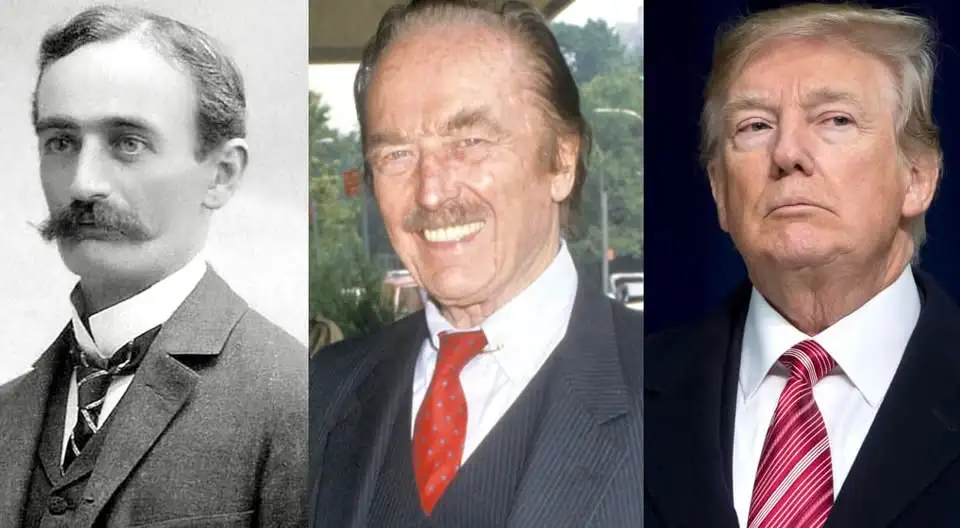
- Friedrich (Frederick) Trump (1869–1918): emigrated to America
- Fred Trump (1905–1999): real estate developer
- Donald J. Trump (born 1946): 45th and 47th US President
Johann Paul is at a critical juncture. He linked the older Drumpf line to the modern Trump dynasty.
Birth, Baptism, and the Curious Name Change
Johann Paul Trump was born on August 1, 1727. Five days later, on August 6, the parish priest baptized him at the Weisenheim am Berg church. The original baptismal record spells his name as Johann Paul Tromp, not Trump. This single document reveals something fascinating. The Trump surname did not exist as a fixed spelling for most of his life.
Parish clerks in 18th-century Germany wrote names by ear. Spelling was not standardized. The same person could appear as Trump, Tromp, Trumpf, or Drumpft across different records. The clerk’s preference, dialect, and handwriting all played a role.
According to verified parish records, Johann Paul’s surname appeared as Tromp until 1780. Then in 1783, a new clerk took over the recording duties at the local church. From that point forward, the family name was written as Trump. This was not a deliberate change by the family.
It was simply the new clerk’s preferred spelling. Yet that small shift fixed the name forever. If that clerk had preferred “Tromp” or “Drumpf,” American history might today reference President Donald Tromp.
Johann Paul Trump’s Grandparents
His paternal grandparents are documented and historically important. His grandfather was Johann Philipp Drumpft (about 1667 to 1707), the earliest recorded ancestor of the entire Trump line, and his grandmother was Juliana Maria Rodenroth. Their son, Johann Sebastian Trump, was Johann Paul’s father.
His maternal grandparents, the parents of his mother Susanna Margretha Kohl, are not named in the records and remain unknown. One note of caution: a claim on some sites that his grandfather was a “mayor of Kallstadt” is unverified and does not match reliable genealogy.
Family and Childhood in 18th-Century Germany
Johann Paul was the eldest of nine children born to Johannes Sebastian Trump and Susanna Margretha Kohl. His siblings included Johann Michael, Johann Lorentz, Anna Margaretha, Johann Jacob, Johann Sebastian Jr., Susanna Elisabeth, and Johann Friederich. Several other names appear in scattered baptismal records.
Life in Bobenheim am Berg followed the rhythm of the agricultural calendar. The village sat in the Pfalz (Palatinate), one of Europe’s oldest and finest wine regions. Vineyards dominated the landscape then, as they do now. Most families grew grapes, kept livestock, and tended small plots of land.
His father’s role as church warden gave the family some local standing. A church warden managed parish property, oversaw collections, and assisted the pastor. It was an unpaid but respected position. This duty likely shaped Johann Paul’s own values around community and stability.
Johann Paul Trump on Wikipedia
Johann Paul Trump has no dedicated Wikipedia page. He appears only inside the larger “Trump family” and “Frederick Trump” articles, listed as one link in the lineage that runs down to Donald Trump.
The reason is notability: he is documented through parish and genealogical records rather than independent coverage, so Wikipedia folds him into the family article instead of giving him his own. For fuller details, his individual profiles live on genealogy platforms like WikiTree, Geni, and FamilySearch, along with a Find A Grave memorial.
The Religious and Political Backdrop
Most blogs about Johann Paul Trump skip the historical setting entirely. That is a mistake. His life cannot be understood without it.
The Electoral Palatinate during the 1700s was a Protestant Lutheran region recovering from devastation. The Thirty Years’ War (1618–1648) had killed roughly a third of the population just two generations before his birth. French armies had repeatedly invaded the area during the late 1600s. Villages were burned. Records were destroyed. Survivors rebuilt slowly.
By the time Johann Paul was born, the region was peaceful but poor. Wine production was the economic backbone. Religion was central to daily life. The Trump family attended the Evangelical Lutheran church. Faith shaped their marriages, baptisms, burials, and community standing. This context explains why his life appears so quiet on paper. He was not failing to make history. He was rebuilding a life in a region that had been broken for generations.
Marriage to Maria Elisabetha Setzer
On February 7, 1768, Johann Paul Trump married Maria Elisabetha Setzer in Bobenheim am Berg. He was 40 years old. This was unusually late for the era. Several factors may explain the delayed marriage. He may have been waiting to inherit family property.
He may have spent years saving money. Or he may have served his community in some capacity that delayed marriage. Records do not specify. His bride had strong local roots herself. Maria Elisabetha was the daughter of Johann Adam Setzer, a member of the parish council in Bubenheim, a village about 14 kilometers north of Bobenheim am Berg.
The marriage joined two respected village families. In 18th-century Germany, this kind of union mattered. It strengthened both families’ social position within the church community.
The Nine Children Who Carried the Bloodline Forward
Johann Paul and Maria Elisabetha had nine children, all born in Bobenheim am Berg. The most historically important among them were:
Johannes Trump (1789–1835): the youngest known son. He moved to nearby Kallstadt in the early 1800s and became a winegrower. His grandson, Friedrich Trump, would emigrate to America in 1885 and start the American branch of the family.
Charlotte Louisa Trump (1789–1833): Johannes’s sister. She married Johann Georg Heinz. Their grandson, Henry John Heinz (1844–1919), founded the H.J. Heinz Company in Pittsburgh, the global ketchup and condiment giant.
This is the key fact most articles miss or rush past. The Trump and Heinz American dynasties share a single 18th-century German ancestor: Johann Paul Trump. His daughter started the Heinz line. His son started the line that produced Donald Trump. Two of the most recognizable American family names in business and politics trace back to the same villager who never left his birthplace.
For more, read: https://infoeshub.com/marilyn-kroc-barg-ray-kroc-daughter/
How a Bobenheim Family Became Americans
The migration story did not begin with Johann Paul. It began with his grandson, Johannes Trump’s son.
Johannes Trump (1789–1835) moved to Kallstadt and married into a winegrowing family. The Trump descendants stayed in Kallstadt for several generations. They worked the vines. They built modest homes. They lived ordinary German village lives.
Then in 1885, Friedrich Trump, Johann Paul’s great-great-grandson, left Kallstadt for New York City. He was 16 years old. He had not completed his mandatory Bavarian military service, which would later cause legal trouble back home. In America, he worked as a barber, ran restaurants, and opened businesses during the Klondike Gold Rush, building modest wealth.
Friedrich’s son, Fred Trump, became a major real estate developer in Brooklyn and Queens. Fred’s son Donald entered the family business in the 1970s, expanded into Manhattan, became a celebrity, and eventually won the US presidency in 2016 and again in 2024. The line from Johann Paul to Donald Trump spans roughly 250 years and one ocean.
Johann Paul Trump’s Career
Johann Paul Trump’s profession is unknown. Parish records describe him only as a bürgerlicher Einwohner, a “citizen-resident,” which reflects his legal standing rather than a trade. It meant he held recognized rights in the village: he could own property, marry within the parish, and pass that status to his children.
Because he lived in the Palatinate wine country, and because several Trump relatives were documented as vintners, he may well have farmed or worked the vines. But no record confirms this, so it stays an educated guess. What is clear is that he was an ordinary village citizen of modest standing, not a nobleman, soldier, or merchant.
Johann Paul Trump’s Net Worth
Johann Paul Trump has no recorded net worth, and the idea barely applies to an 18th-century villager. His status as a citizen-resident suggests he owned modest property, placing him above the landless poor but well short of wealthy.
The famous Trump fortune came generations later and an ocean away, built by Friedrich Trump in America and greatly expanded by Fred Trump in New York real estate. It had nothing to do with Johann Paul. Any specific dollar figure attached to his name online is fabricated.
The Heinz Connection
The Heinz branch of Johann Paul’s descendants is just as remarkable. His daughter Charlotte Louisa married Johann Georg Heinz. Their son, John Henry Heinz, emigrated to the United States in 1840, settling in Pennsylvania. His son, Henry John Heinz, founded the H.J. Heinz Company in 1869 and built it into a global food empire. The “57 Varieties” slogan became one of the most famous marketing lines in American history.
Later, Heinz descendants included Henry John Heinz III (1938–1991), who served as a US Senator from Pennsylvania. After his death in a plane crash, his widow, Teresa Heinz, married Senator John Kerry, the 2004 Democratic presidential nominee.
So Johann Paul Trump is not only the third great-grandfather of one US President. He is also a direct ancestor of a US senator and the stepfather-in-law of a Secretary of State and presidential candidate. His descendants have shaped American business, politics, and food culture for over 150 years.
What His Daily Life Actually Looked Like
Modern readers picture 18th-century German village life as either romantic or grim. The reality fell in between. Johann Paul woke at sunrise. He worked the land or attended to whatever trade his household practiced. His wife managed the home, tended the kitchen garden, raised the children, and prepared meals from local produce. Sundays meant church. Religious holidays meant community gatherings.
Major family events (births, marriages, deaths) happened within walking distance of where they were born.
The village had no electricity, no running water, and no formal medical care beyond local midwives and herbalists. Childhood mortality was high. Many of his nine children would have lost siblings or close cousins to common illnesses. Despite this, the Trumps survived. Their lineage continued unbroken.
Death and Burial
Johann Paul Trump died on February 10, 1792, at the age of 64. He was buried two days later, on February 12, 1792, in Bobenheim am Berg. The parish records list the burial but do not provide the cause of death. Reaching age 64 in 18th-century rural Germany was a respectable lifespan. Many men of his era died decades earlier from disease, accident, or war.
He outlived multiple political upheavals. He saw the early stirrings of the French Revolution before his death. He never witnessed Napoleon’s wars, which would soon reshape the entire region. His grave site is documented on FindAGrave and other genealogical archives today. It serves as a quiet pilgrimage site for researchers studying the origins of the Trump and Heinz families.
Why His Life Matters Today
Johann Paul Trump never sought historical importance. He left no diary, no portrait, no business empire. His name appears in parish records, marriage registers, and birth documents. That is the entire archive of his life. Yet his story holds genuine value for several reasons.
It corrects the myth of inherited greatness. The Trump family did not descend from German nobility, military leaders, or scholars. They descended from working villagers who lived modest lives. The wealth and fame came generations later, through migration and entrepreneurship, not bloodline privilege.
It illustrates how identity gets shaped by clerks. A surname spelling fixed by an anonymous parish clerk in 1783 became one of the most recognizable family names in modern history. Small administrative choices can echo for centuries. It reminds us that ordinary people start extraordinary lineages. Two American empires (Trump real estate and politics, Heinz food and consumer goods) both trace back to one man whose own life was unremarkable by his contemporaries’ standards.
The Verified Sources Behind This Story
Unlike many online articles about Johann Paul Trump, this account draws from primary and authoritative genealogical sources rather than recycled blog content. Every major fact in this article can be traced back to one of the following verified records.
| Source | Type | What It Verifies |
|---|---|---|
| Pfalz: Zentralarchiv der Evangelischen Kirche, Bad Dürkheim | Primary archive (Evangelical Church Central Archive) | Original parish records of the Trump family in the Palatinate region |
| Weisenheim am Berg Church Registers (1755–1798) | Primary parish records | Baptism, marriage, and burial entries for Johann Paul Trump and his family |
| FamilySearch, Germany Marriages Database (1558–1929) | Digitized record collection | Marriage of Johann Paul Trump to Maria Elisabetha Setzer on February 7, 1768 |
| FamilySearch, Germany Births and Baptisms (1558–1898) | Digitized record collection | Birth and baptism dates for Johann Paul Trump and his nine children |
| Find A Grave Memorial #235702094 | Genealogical memorial database | Death date, burial date, and confirmed lineage to Donald Trump and H.J. Heinz |
| WikiTree Profile (Trump-98) | Collaborative genealogy platform | Full family tree, parents, siblings, spouse, and descendants |
| Geni.com Genealogy Profile | Public genealogy database | Cross-referenced family relationships and dates |
| Wikipedia, Trump Family Article | Encyclopedic reference | Verified summary of the full Trump lineage from Drumpft to Donald Trump |
| Wikipedia, Frederick Trump Article | Encyclopedic reference | Migration path from Kallstadt to America in 1885 |
| Archion Digital Archive (Microfilm 643) | Digitized church microfilm | Scanned images of original 18th-century parish documents |
Researchers can verify nearly every fact in this article through digitized German church records and reputable genealogical databases. Anyone with a free FamilySearch or WikiTree account can cross-check the dates, names, and relationships listed above.
Frequently Asked Questions
Who exactly was Johann Paul Trump?
Johann Paul Trump was an 18th-century German villager born in Bobenheim am Berg. He is the third great-grandfather of US President Donald Trump and the great-grandfather of H.J. Heinz Company founder Henry J. Heinz.
When and where was Johann Paul Trump born?
He was born on August 1, 1727, in Bobenheim am Berg, in the Electoral Palatinate region of what is now Rhineland-Palatinate, Germany. He was baptized five days later at the parish church in Weisenheim am Berg.
Was the family name always spelled Trump?
No. Parish records show the surname was written as Tromp until 1780. In 1783, a new parish clerk began spelling it as Trump, and that spelling stuck.
Who was the earliest known Trump ancestor?
The earliest documented male ancestor in the Trump line is Johann Philipp Drumpft, born around 1667 and died in 1707. He was Johann Paul Trump’s grandfather.
How many children did Johann Paul Trump have?
He had nine children with his wife Maria Elisabetha Setzer. The most historically significant were Johannes Trump, who continued the line that led to Donald Trump, and Charlotte Louisa Trump, whose descendants founded the Heinz food company.
How is Johann Paul Trump related to H.J. Heinz?
He is the great-grandfather of Henry John Heinz, founder of the H.J. Heinz Company. The Heinz line descends from Johann Paul’s daughter Charlotte Louisa, who married Johann Georg Heinz.
What was Johann Paul Trump’s profession?
His exact profession is unknown. Parish records describe him only as a bürgerlicher Einwohner, a recognized citizen-resident of his village. The term implies legal standing and property rights but does not specify a trade.
When did Johann Paul Trump die?
He died on February 10, 1792, at age 64, in his home village of Bobenheim am Berg. He was buried on February 12, 1792.
Final Thoughts
Johann Paul Trump’s life proves that history is often built quietly. He raised a family. He attended church. He worked his land. He died in the same village where he was baptized. By every visible measure, his life was unremarkable. Yet the names of his descendants now appear on ketchup bottles, real estate towers, election ballots, and history textbooks. Two American dynasties trace back to one Bobenheim villager who never imagined any of it.
That is the strange truth of genealogy. The most consequential ancestors are often the ones who did the least to make themselves famous. They simply lived, married, and raised children well enough that the line continued. Everything else (the immigration, the wealth, the power, the political careers) came later, through choices made by people Johann Paul never met.